Why Your 5 Whys Keep Ignoring Algorithms: The Simple ‘Feed Why’ That Reveals Who’s Really Driving Your Thoughts
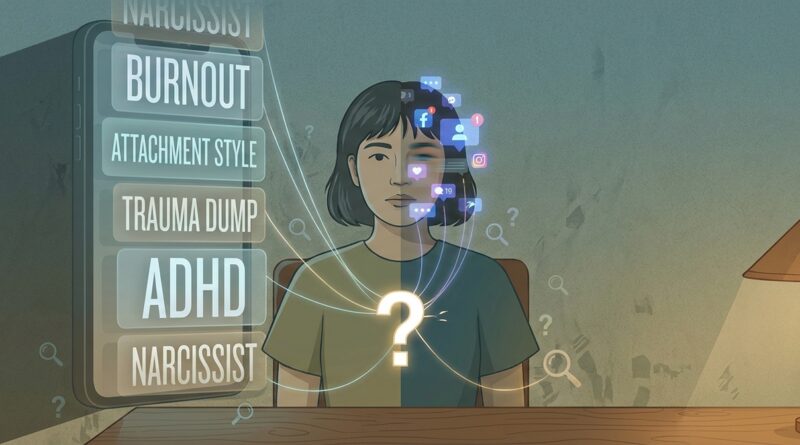
You sit down to figure out why you feel off. You try the classic 5 Whys. Why am I anxious? Why am I procrastinating? Why do I feel behind? But the answers start sounding weirdly familiar. “Maybe I have high-functioning anxiety.” “Maybe I am avoidantly attached.” “Maybe I am secretly self-sabotaging.” It feels like insight, but sometimes it is just yesterday’s scroll talking. That is the frustrating part. You are trying to be honest with yourself, and your feed keeps sneaking into the conversation.
If you use TikTok, Reels, or YouTube Shorts for mental health tips, productivity advice, or relationship content, there is a simple extra question worth asking before you do any root cause work. Ask this first. Why does my algorithm want me to think this? I call it the “Feed Why.” It is not about blaming social media for every feeling. It is about noticing when engagement-driven content starts acting like your inner voice. Once you spot that, your 5 Whys gets a lot more useful.
⚡ In a Hurry? Key Takeaways
- Your 5 Whys can go off track when social feeds plant ready-made explanations for your feelings.
- Before analyzing yourself, ask, “Why does my algorithm want me to think this?” Then separate what you actually feel from what performs well online.
- Short-form psychology can be helpful, but it is not a diagnosis, and it should not replace support from a qualified professional when things feel serious or persistent.
Why this keeps happening
The 5 Whys is a simple method. You start with a problem and keep asking why until you reach a root cause. It works well for many things because it forces you past the first easy answer.
But there is a catch. The method assumes the answers are coming from you, or at least from reality. Not from a machine that has spent months learning what makes you pause, react, worry, compare, or click.
That is the missing piece in a lot of self-analysis now, especially when people search for how social media algorithms affect root cause analysis. If your feed keeps showing you burnout videos, trauma checklists, attachment-style clips, and “signs you are the problem” content, those ideas become the vocabulary you reach for first.
Not because they are always true. Because they are available, dramatic, and repeated.
The simple “Feed Why” that changes the process
Before you ask your first “why,” pause and ask this:
Why does my algorithm want me to think this?
That one question does two useful things fast.
1. It reminds you that feeds are not neutral
Your For You Page is not a mirror. It is a prediction machine. Its job is not to understand you deeply. Its job is to keep you watching.
That means it often rewards content that is:
- Emotionally intense
- Highly relatable in a broad way
- Identity-based, so you keep coming back
- Open-ended enough that you can see yourself in it
“You are not lazy, you are burnt out” can be a helpful correction for some people. It can also be a very sticky piece of content that spreads because lots of tired people want it to be true.
2. It helps you separate influence from evidence
If a thought showed up right after 20 videos about emotional unavailability, maybe that thought is a clue. Or maybe it is a suggestion.
You do not have to reject it. You just do not want to mistake exposure for proof.
What algorithms do to your self-diagnosis
Algorithms are excellent at creating a feeling of pattern recognition. See enough clips about one topic and ordinary human experiences can start looking like symptoms.
Here is how that bends your root cause work.
They narrow the menu of explanations
If your feed is full of ADHD content, every focus problem starts to look like ADHD. If it is full of attachment content, every awkward conversation becomes an attachment wound. If it is all hustle culture backlash, every hard week becomes burnout.
Sometimes those ideas fit. Sometimes they just crowd out other explanations like lack of sleep, grief, money stress, a bad manager, loneliness, hormones, or plain old overcommitment.
They reward identity over context
Feeds love labels because labels travel well. “You are an empath.” “You are a people-pleaser.” “You are trauma-bonded.” “You are healing.”
Real life is usually messier. You might be tired in one area, avoidant in one relationship, confident at work, anxious at night, and mostly fine after two good weekends and fewer notifications.
Context is boring online. Context is everything offline.
They make temporary states feel permanent
A rough month can feel like a defining trait if your feed gives you a polished explanation for it. That is one reason people can feel “broken in five different ways” by the end of a scroll.
The feed likes a strong narrative. Your nervous system may just need lunch, sleep, space, or a real conversation.
How to use the Feed Why with the 5 Whys
You do not need to throw out the 5 Whys. Just add a filter first.
Step 1. Write the problem in plain language
Not “I am in a cycle of anxious attachment and self-abandonment.” Start simpler.
Try:
- I feel tense every Sunday night.
- I keep putting off one project.
- I feel bad after being on Instagram.
- I am suddenly convinced I am behind in life.
Step 2. Ask the Feed Why
Before going deeper, ask:
- Did I start thinking this after seeing similar content?
- What kind of post keeps pushing this idea at me?
- What emotion does that content stir up in me?
- Does this explanation make me feel informed, or just alarmed?
If the answer is “yes, my feed has been hammering this topic,” mark that. It does not mean the idea is false. It means it might be amplified.
Step 3. Continue the 5 Whys using evidence from your life
Now ask your whys, but ground each answer in something concrete.
For example:
Problem: I feel behind in life.
Feed Why: My feed is full of career wins, house updates, glow-ups, and “what I achieved by 30” videos.
Why 1: Why do I feel behind? Because I compare myself after scrolling.
Why 2: Why do I compare myself after scrolling? Because I am seeing edited milestones with no context.
Why 3: Why does that hit me so hard right now? Because I feel uncertain about my next step at work.
Why 4: Why do I feel uncertain? Because my role changed and I have not adjusted my goals.
Why 5: Why have I not adjusted them? Because I have been avoiding a hard planning session.
Notice the difference. The root cause is not “I am a failure.” It is closer to “I need to update my goals and stop marinating in comparison content.” That is useful.
Three signs your feed is hijacking your “why” chain
Your answers sound polished but not personal
If your explanation sounds like a caption card, be careful. Real self-knowledge is often less catchy and more specific.
You keep collecting labels but nothing improves
If every week brings a new framework, but your day-to-day life stays the same, you may be gathering identities instead of solving problems.
You feel more certain and more helpless at the same time
This is a big one. You feel like you finally “get” yourself, but somehow you also feel less capable of change. That often means the explanation is emotionally gripping, not practically useful.
What to ask instead of “What is wrong with me?”
When the feed is loud, use questions that bring you back to the ground.
- What happened this week that might explain how I feel?
- What changed in my sleep, schedule, stress, or relationships?
- What do I notice in my body before I open an app, and after?
- What would this feeling mean if I had never seen a video about it?
- What need is here right now?
That last question matters most. Need is often more useful than label.
You may not need a perfect theory of yourself. You may need rest, structure, reassurance, boundaries, novelty, movement, less comparison, or a doctor’s appointment.
Short-form insight is not useless. It just needs a speed limit.
Some social content really can help you name a pattern, feel less alone, or start a good conversation. The problem is not that these videos exist. The problem is treating engagement-optimized fragments as the final word on your inner life.
Think of them as prompts, not verdicts.
A good prompt says, “Does this fit?”
A bad verdict says, “This is who you are now.”
A practical reset if your brain feels “feed-shaped”
Try a 48-hour content cooling-off period
If you are in a spiral, stop feeding the topic for two days. Do not search it. Do not watch more clips “for clarity.” Let your thoughts settle.
Switch from diagnosis language to observation language
Instead of “I am avoidant,” try “I pulled back after that conversation.”
Instead of “I am burnt out,” try “I have been exhausted, irritable, and unfocused for three weeks.”
Observation gives you something to work with.
Talk to one person who knows your actual life
Your friend, partner, therapist, sibling, or doctor has one advantage over your feed. They know your context.
That matters a lot more than a perfectly edited 42-second clip.
At a Glance: Comparison
| Feature/Aspect | Details | Verdict |
|---|---|---|
| Standard 5 Whys | Useful for digging past surface problems, but it assumes your starting explanation is not already shaped by feed content. | Good tool, incomplete for social-media-heavy lives. |
| 5 Whys plus “Feed Why” | Adds one checkpoint before analysis. You ask how the algorithm may be steering your interpretation. | Best option for clearer, more grounded self-reflection. |
| Self-diagnosis from short videos alone | Fast, relatable, and emotionally convincing, but often missing context, nuance, and real evidence. | Fine as a prompt. Risky as a conclusion. |
Conclusion
Short-form psychology content and self-diagnosis are everywhere right now, and it is easy to do serious root cause work with frameworks that never stop to question how your feed shapes your fears, wants, and sense of self. That is why the extra question matters so much. Before you ask five layers of “why,” ask one simple thing first. Why does my algorithm want me to think this? It helps you avoid chasing root causes that were planted by engagement systems, not discovered through honest reflection. Then you can get back to what matters. What you actually feel. What you actually need. What you actually value today. That is a much better place to start.