Why Your 5 Whys Keep Ignoring Time: The Simple ‘Timeline Why’ Behind Problems That Quietly Creep Up On You
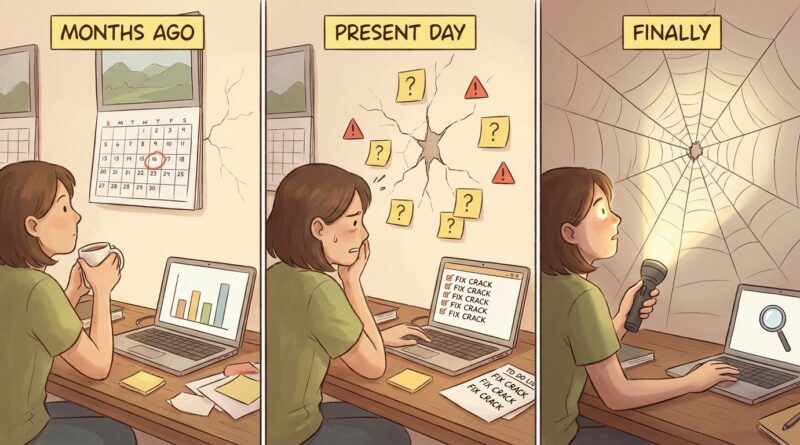
You know this feeling. The same problem keeps coming back, but each time it looks small enough to ignore. A missed deadline here. A higher bill there. A customer complaint that feels like a one-off. So you patch it, move on, and tell yourself it is not a big deal. Then one day it very much is a big deal, and you are left staring at the damage, wondering why you did not spot the pattern sooner. That is where normal root cause analysis often falls short. The usual 5 Whys is good at explaining what hurts right now. It is much worse at catching slow problems that build quietly over weeks or months. A Timeline Why adds one missing question. When did this actually start drifting? That simple shift can change how you see burnout, money leaks, team friction, and product churn. It helps you catch the creep before it becomes a crisis.
⚡ In a Hurry? Key Takeaways
- A Timeline Why asks when the slide began, not just why today’s pain showed up.
- Build a quick timeline of changes in habits, workload, money, product use, or team behavior before you start asking why.
- This approach is useful because slow problems often feel harmless in the moment, which makes them easy to miss until the costs are locked in.
Why the usual 5 Whys misses slow-motion problems
The classic 5 Whys works best when something breaks in a clear, visible way. The server went down. The project shipped late. A feature failed. You ask why, then why again, and keep going until you find the root cause.
But a lot of real-life problems do not arrive like a fire alarm. They creep. Quietly. A little more stress each month. A few more cancelled subscriptions than usual. A slow dip in customer trust. By the time the pain is obvious, the real starting point is already behind you.
This is where timeline root cause analysis psychology matters. People are bad at noticing gradual change. We adapt to it. We normalize it. We explain it away because each step feels too small to deserve a full response.
Think of it like a car pulling slightly to one side. On a single trip, you barely notice. Over a year, your tires wear out.
What a “Timeline Why” actually is
A Timeline Why is one extra lens you add before or during root cause analysis.
Instead of starting with, “Why is this happening now?” you start with, “When did this start becoming true?”
That sounds small. It is not.
Because once you pin down the timeline, you often stop blaming the loudest symptom in the present and start seeing the slower chain underneath it.
The core question
Ask this first: When did the trend begin to shift, even slightly?
Not when it became painful. Not when someone complained. Not when the dashboard turned red. When did it first start drifting?
Why this works psychologically
Our brains like dramatic causes. We want one neat event to blame. A bad hire. A tough quarter. A broken tool. But many problems come from accumulation, not explosion.
A Timeline Why helps because it forces you to reconstruct reality instead of trusting your memory of what felt important. That matters. Memory is very good at protecting the story of “this came out of nowhere.” It is much less good at admitting, “the clues were there for months.”
A simple example
Say a founder says, “Why are we suddenly losing customers?”
Normal 5 Whys might go like this:
Why are customers leaving? Support feels slow.
Why is support slow? The team is overloaded.
Why is the team overloaded? Tickets increased.
Why did tickets increase? The product is confusing.
Why is the product confusing? Recent onboarding changes were rushed.
That is useful. But it still centers the current pain.
Now add a Timeline Why:
When did churn start rising?
Maybe not this month. Maybe four months ago.
What changed around then?
A pricing page rewrite. A new activation flow. A quieter but steady rise in unresolved onboarding confusion.
Now the story changes. Support was not the root. Support was where the root became visible.
The hidden trap: “It never felt bad enough”
This is the real reason creeping problems survive so long.
Most slow problems are tolerated because each moment, on its own, feels manageable. You can absorb one extra late night. One odd expense. One underperforming week. One more complaint.
Humans are built to handle isolated friction. We are much worse at spotting compound friction.
That is why people end up fixing the same issue over and over. They are not lazy. They are looking at snapshots instead of a movie.
Where Timeline Why helps in real life
Burnout
Burnout rarely starts on the day you feel exhausted. It often starts when recovery quietly disappears. Shorter breaks. More context switching. Less sleep. No real weekends.
If you only ask why you feel awful now, you may blame this week’s meeting load. If you ask when your energy trend started dropping, you might find the real shift happened two quarters ago.
Money leaks
Businesses and households do this all the time. You notice cash feels tight and look for one big cost. But the drain may be spread across ten smaller habits that began months apart.
A Timeline Why can reveal the creep. Subscription stacking. Shipping costs edging up. A discount policy that became permanent. Tiny changes. Big result.
Product churn
Teams often treat churn like a sudden bug. But churn is often a lagging signal. The actual trouble began earlier, when activation dipped, expectations got muddy, or trust started eroding.
Team tension
Conflict often gets blamed on the latest argument. But when you map the timeline, the first crack may have been role confusion, uneven decision power, or unresolved ownership months before.
That is also where power enters the picture. If a pattern keeps repeating because nobody really has the authority or safety to change it, this is a good companion read: Why Your 5 Whys Keep Ignoring Power: The Simple ‘Control Why’ That Explains Hidden Resistance To Change.
How to do a Timeline Why without turning it into homework
You do not need a giant spreadsheet. Keep it simple.
Step 1: Name the pain clearly
Start with the current problem in plain language.
Examples:
- We keep missing delivery dates.
- I feel tired all the time.
- Customers are dropping after the first month.
- Our spending keeps creeping up.
Step 2: Mark when it became obvious
Write down the moment you could no longer ignore it.
This matters because it separates “when it hurt” from “when it began.” Those are often very different dates.
Step 3: Walk backward month by month
Now create a rough timeline. Look for changes in:
- workload
- tools
- staffing
- sleep or energy
- customer behavior
- process changes
- spending habits
- expectations and goals
You are not hunting for perfect precision. You are looking for the first wobble.
Step 4: Ask “What changed just before the drift?”
Once you spot the first shift, ask why around that point.
Not why the crisis happened today. Why the line first bent.
Step 5: Separate triggers from trends
A trigger is the thing that made the problem visible. A trend is the thing that made it likely.
Example. The trigger was a major client complaint. The trend was three months of slower response times and unclear ownership.
If you only fix the trigger, the problem comes back wearing a different shirt.
Common mistakes people make
They trust memory too much
Memory is selective. Use calendars, dashboards, bank statements, support logs, journal notes, Slack history, or product analytics if you have them.
They stop at the first plausible answer
The first answer is often emotionally satisfying, not actually correct. “It is just a busy season” can hide a bad planning system that has been there all along.
They focus only on dramatic events
Big events matter. But slow problems often come from smaller repeated choices.
They confuse blame with cause
The point is not to find a villain. The point is to find the earliest useful point of intervention.
Why this matters right now
Lots of people are talking about smarter root cause analysis. Founders love saying teams are “debugging symptoms, not problems.” Fair enough. But many people still treat life and work issues like sudden bugs, even when they are really slow trends.
That is why timeline root cause analysis psychology is so useful. It matches how many real problems actually grow. Not all at once. Bit by bit. Quietly enough to be tolerated. Expensive enough to matter later.
At a Glance: Comparison
| Feature/Aspect | Details | Verdict |
|---|---|---|
| Standard 5 Whys | Good for visible failures and immediate incidents. Tends to start with today’s pain point. | Useful, but can miss long, quiet build-ups. |
| Timeline Why | Adds a time lens. Asks when the drift began and what changed before the pain became obvious. | Best for burnout, churn, money leaks, and repeated “small” issues. |
| Best practical use | Combine both. Map the timeline first, then ask why at the earliest meaningful shift. | Usually the clearest path to finding a root you can actually fix. |
Conclusion
The big win here is simple. Stop treating every painful issue like it appeared out of nowhere. A lot of the messes that frustrate us most, in work and in life, are not sudden bugs. They are slow trends that never felt urgent enough in the moment. A Timeline Why helps you catch those creeping problems earlier by forcing a concrete look at when things really began to slip, instead of blaming whatever hurts today. That is useful for burnout, money leaks, product churn, and all the patterns that quietly bake in damage while you are busy patching symptoms. If you can spot the first drift, you have a much better chance of fixing the real problem before it gets expensive.