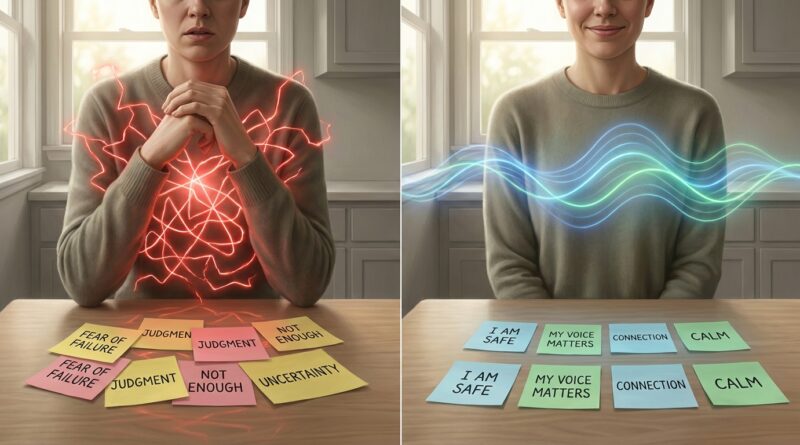
Why Your 5 Whys Keep Missing Emotional Pain: The Simple ‘Nervous System Why’ That Explains Why You Freeze Instead of Fix Things
You can know exactly why a problem keeps happening and still feel completely unable to do anything about it. That disconnect is maddening. On paper, the issue looks obvious. You avoid the conversation because you hate conflict. You procrastinate because you fear failing. You people-please because you want approval. Fine. But then the moment comes to act, and your body freezes, your mind goes foggy, and somehow you are back in the same loop again. That does not mean you are lazy, broken, or secretly committed to misery. It often means your logic found the story, but missed the alarm system. If your body reads a situation as unsafe, it will hit the brakes before your best intentions ever get a vote. That is where a simple nervous system root cause why framework can help. It adds one more question to your usual problem-solving process, and that question changes everything.
⚡ In a Hurry? Key Takeaways
- The missing piece in many “5 Whys” exercises is this: what does my body think it is protecting me from right now?
- When you freeze, shrink, avoid, or self-sabotage, start by making the next step feel safer, smaller, and less exposing.
- This is not about making excuses. It is about finding the real barrier so you can make change that actually sticks.
Why logic alone keeps letting you down
The classic 5 Whys method is useful. It helps you move past surface explanations and spot patterns. But it was built for systems and process problems, not always for human pain.
If a production line fails, asking “why” five times can reveal a broken step. If you keep shutting down in hard conversations, the answer is rarely just a broken thought. It is often a body-level protection response.
That is why smart, self-aware people get stuck. They can explain their pattern beautifully. They just cannot interrupt it in real time.
You might say, “I avoid giving feedback because I fear conflict.” True. But that still leaves out the deeper layer. What does conflict feel like in your body? Threat. Rejection. Exposure. Punishment. Loss of connection. Humiliation.
Once you see that, your next move changes. You stop asking only, “Why am I like this?” and start asking, “What is my nervous system trying to prevent?”
The simple add-on: the Nervous System Why
Here is the extra question to plug into any why framework:
“What does my body believe will happen if I do this?”
That is the nervous system why.
It does not replace the regular whys. It sharpens them. It helps you spot whether your problem is really about poor planning, fuzzy priorities, lack of skill, or a body that expects danger.
For example:
Problem: I keep putting off an important conversation.
Why 1: Because I dread it.
Why 2: Because it might turn into conflict.
Why 3: Because conflict makes me panic.
Nervous System Why: What does my body believe will happen if I speak honestly?
Answer: I will be attacked, rejected, shamed, or abandoned.
Now you are finally at the layer that explains the freeze.
What “freeze” actually means in plain English
Freeze is not just sitting still and staring at the wall. It shows up in sneakier ways.
- Endless research instead of action
- Needing the perfect script before speaking up
- Feeling suddenly tired when it is time to do the hard thing
- Forgetting basic tasks you care about
- Going numb and telling yourself you “just don’t know”
- Over-explaining, apologizing, or backing down fast
This is why “just do it” advice can feel insulting. Your body is not treating the task like a simple task. It is treating it like a threat.
How to use the nervous system root cause why framework
You do not need a complicated worksheet. Start with four steps.
1. Name the stuck point
Be specific. Not “my life is a mess.” Try, “I keep avoiding replying to my boss,” or “I go blank when my partner is upset.”
2. Do your normal whys
Ask why a few times until you hit a real emotional theme.
Example:
I am avoiding the email.
Why? Because I am anxious.
Why? Because I think I handled something badly.
Why? Because I do not want to look incompetent.
3. Add the nervous system why
Ask, “What does my body believe will happen if I face this?”
Maybe the answer is:
- I will get yelled at.
- I will be trapped.
- I will disappoint someone.
- I will feel stupid.
- I will lose connection.
That answer matters because it points to the safety need under the behavior.
4. Build a safety upgrade, not just a willpower plan
This is the part most people skip.
If your body expects danger, the fix is not only “be more disciplined.” The fix is to make the action feel safer.
That might mean:
- Writing notes before the conversation
- Practicing one sentence out loud first
- Sending a shorter email instead of the perfect one
- Talking while walking so your body stays less activated
- Setting a time limit, like 10 minutes, so the task does not feel endless
- Asking a trusted person to help you rehearse
Real-world examples
The hard conversation you keep postponing
Logical why: I do not like confrontation.
Nervous system why: My body believes disagreement leads to emotional danger.
Safety upgrade: Pick a calm moment, write three key points, and open with one grounded sentence like, “I want to talk about this without fighting.”
The project you cannot start
Logical why: I am a procrastinator.
Nervous system why: Starting means risking visible failure.
Safety upgrade: Make the first version private, ugly, and tiny. Ten minutes. No one sees it yet.
The pattern of saying yes when you mean no
Logical why: I want people to like me.
Nervous system why: My body believes boundaries threaten belonging.
Safety upgrade: Use a bridge phrase. “Let me get back to you.” That buys time and lowers the panic.
Why this feels so different from mindset advice
Mindset advice often tells you to challenge your beliefs. That can help. But if your heart is racing, your chest is tight, and your brain just left the building, a better thought is usually not enough.
Your body needs evidence of safety.
That is why this framework is practical. It turns a vague struggle into a useful question. Not “What is wrong with me?” but “What protection response is showing up, and what would help my body unclench enough to move?”
If you have already done a lot of reflection and still feel stuck, you may also like Why Your 5 Whys Keep Surfacing Insight But Not Change: The Simple ‘Action Why’ That Turns Aha-Moments Into Different Behavior Tomorrow. It pairs well with this idea because once you spot the protection pattern, you still need a step small enough to actually do tomorrow.
What a safety upgrade looks like
A safety upgrade is a small change that helps your body stop reading the next step as overwhelming.
Think of it like this. If a laptop keeps overheating, yelling at it to process faster does not help. You check the cooling, airflow, and load. Human beings are not machines, of course. But the basic point still fits. Performance drops when the system is overloaded.
Here are a few simple safety upgrades:
- Reduce exposure: Draft before sending. Practice before speaking.
- Reduce intensity: Do the first step for five minutes, not an hour.
- Increase predictability: Schedule the task. Use a script. Know your opening line.
- Increase support: Sit near a calming person. Tell a friend your plan.
- Increase physical regulation: Unclench your jaw, feel your feet, slow your exhale, stand up, walk.
None of this is dramatic. That is the point. Small safety often works better than big pressure.
What this framework is not
It is not a way to avoid responsibility.
It is not saying every hesitation comes from trauma.
It is not a replacement for therapy, especially if your shutdown is intense, chronic, or tied to past abuse.
It is simply a better diagnostic tool. A lot of repeated stuckness makes more sense when you stop treating it as a character flaw and start treating it as protection.
Quick questions to ask yourself when you freeze
- What am I about to do that feels dangerous, exposing, or overwhelming?
- What outcome does my body seem to be trying to prevent?
- What sensation tells me I am going into protection mode? Tight chest, blank mind, urge to escape?
- What would make the next step feel 10 percent safer?
- What is the smallest honest action I can do without flooding myself?
At a Glance: Comparison
| Feature/Aspect | Details | Verdict |
|---|---|---|
| Standard 5 Whys | Good for finding logical causes, patterns, and surface emotional themes. | Useful, but often incomplete for shutdown and avoidance. |
| Nervous System Why | Asks what your body believes it is protecting you from if you act. | Best for understanding freeze, self-sabotage, and repeated stuckness. |
| Safety Upgrade | Turns insight into a smaller, safer next step your body can tolerate. | Most practical way to get movement without relying on brute force. |
Conclusion
If you keep understanding your problems but not changing them, you are probably not missing intelligence. You may be missing the right layer of the problem. There is a growing wave of useful conversation around this for a reason. Insight alone does not heal old pain or shift deep patterns. A lot of capable people stay stuck because they keep solving the logic layer while ignoring how their body is trying to protect them. The nervous system root cause why framework is simple, but it can change the whole tone of the process. Instead of another abstract lecture about mindset, it gives you something kinder and more useful. Ask what your body fears. Then build one small safety upgrade around that answer. That is how repeated avoidance, freeze, and self-sabotage start becoming specific problems you can actually work with today.