Why Your 5 Whys Keep Ignoring Belief: The Simple ‘Core Story Why’ That Reveals The Hidden Rule Running Your Life
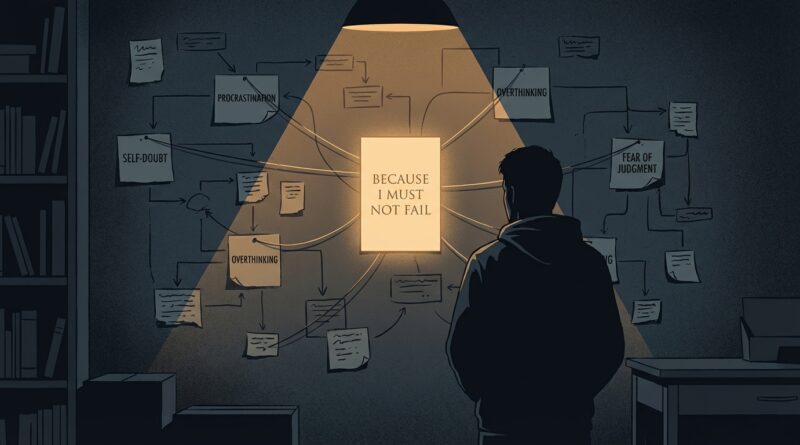
You can know the “root cause” of a problem and still keep repeating it. That is the maddening part. You tell yourself you procrastinate because you are tired. Or you keep ending up in the same argument because you “just need better communication.” On paper, that sounds sensible. In real life, nothing moves. If that feels familiar, you are not broken and you are not missing discipline. You may simply be stopping your analysis one layer too early. The usual 5 Whys method is good at finding process problems. It is less good at catching the belief hiding underneath the process. That hidden belief is what I call the Core Story Why. It is the quiet rule in your head that says, “This is how the world works,” or “This is who I am.” And once you see that rule clearly, your repeated problem often makes a lot more sense.
⚡ In a Hurry? Key Takeaways
- Your repeated behavior often is not driven by a lack of effort. It is driven by a hidden core belief that your usual 5 Whys never names.
- After asking “why” a few times, add one more question: “What would I have to believe for this behavior to make sense?”
- This is a self-reflection tool, not a replacement for therapy. If your answers bring up trauma, panic, or deep distress, getting professional support is a smart next step.
Why the usual 5 Whys can miss the real reason
The classic 5 Whys came from problem-solving in business and manufacturing. It works well when the issue is concrete.
Why did the machine stop? A fuse blew. Why did the fuse blow? The bearing overheated. Why did it overheat? Not enough lubrication.
Clean. Useful. Fixable.
But people are not machines. We run on habits, fears, hopes, old memories, and stories we barely notice. So when you use 5 Whys on yourself, you often end at something that sounds true but is still incomplete.
For example:
I missed the deadline.
Why? I procrastinated.
Why? I felt overwhelmed.
Why? I had too much to do.
Why? I did not plan well.
Why? I have poor time management.
That sounds like a root cause. It may even be partly true. But it often does not explain why the exact same pattern keeps showing up even when you try planners, apps, or better routines.
What if the real driver is a belief like, “If I do this well, people will expect more from me,” or “If I try my hardest and fail, that will prove I am not good enough”? That changes everything.
What a “Core Story Why” actually is
A Core Story Why is the belief-level answer underneath your repeating behavior.
It is not just, “I was tired.” It is, “Rest is lazy unless I have earned it.”
It is not just, “I avoid hard conversations.” It is, “If I upset someone, I will be abandoned.”
It is not just, “I never promote my work.” It is, “Being visible is dangerous.”
That is the hidden rule running the system.
I call it a story because it usually sounds like a plain fact when it lives in your head. You do not experience it as a belief. You experience it as reality.
Why this matters
Once you identify the story, a lot of confusing behavior stops looking random.
You are not failing for no reason. You are being loyal to a belief.
And people are very consistent when they are obeying a rule they do not realize they are following.
Examples of core belief root cause analysis in real life
Burnout
Problem: You keep saying yes to too much.
Basic 5 Whys answer: You have weak boundaries.
Core Story Why: “My value comes from being useful.”
Now your behavior makes sense. Saying no does not just feel awkward. It feels like a threat to your worth.
Self-sabotage
Problem: You quit when progress starts to show.
Basic 5 Whys answer: You fear success.
Core Story Why: “If I am fully seen, I will be judged and rejected.”
Again, the pattern is not random. Pulling back feels safer than being visible.
Motivation
Problem: You cannot stick to the routine you say you want.
Basic 5 Whys answer: You lack discipline.
Core Story Why: “If I cannot do it perfectly, it does not count.”
That belief turns every small miss into a total collapse.
How to find your own Core Story Why
You do not need a whiteboard, a management consultant, or a color-coded productivity app. You need honesty and a little patience.
Step 1: Name one repeating problem
Pick something specific. Not “my life is a mess.” More like:
- I avoid sending important emails.
- I overcommit and then resent everyone.
- I pick partners who need rescuing.
- I freeze when I have to make a decision.
Step 2: Do the normal 5 Whys first
Write out the chain. Keep going until you hit the first reasonable answer.
Example:
I avoid sending invoices.
Why? I put them off.
Why? I feel tense when I think about them.
Why? I worry clients will think I am pushy.
Why? I do not want them annoyed with me.
Why? I hate feeling like I am asking for too much.
Good start. But do not stop there.
Step 3: Ask the belief question
Now add this:
“What would I have to believe for this behavior to make perfect sense?”
In the invoice example, possible answers are:
- “Asking for money makes me selfish.”
- “People will only like me if I am easy and low-maintenance.”
- “My needs are less important than other people’s comfort.”
That is where the deeper analysis starts.
Step 4: Test the answer by looking for the old rule
A real Core Story Why usually has three signs:
- It feels emotionally loaded, not just logically correct.
- You can spot it showing up in more than one area of life.
- Part of you resists writing it down because it feels too true.
If your answer is “I need to manage my time better,” that is probably still a surface cause. If your answer is “If I slow down, I become worthless,” now you are getting closer.
The difference between a cause and a rule
This is the key shift.
A cause explains what happened. A rule explains why you keep reproducing it.
“I was exhausted” is a cause.
“Rest must be earned” is a rule.
“I stayed quiet because I feared conflict” is a cause.
“Disagreement means danger” is a rule.
When you only fix causes, you get temporary relief. When you find the rule, you can finally understand the engine underneath.
Why people miss belief-level answers
Mostly because belief-level answers can be uncomfortable.
It is much easier to say, “I need to get organized,” than to say, “I believe mistakes make me unlovable.” One sounds practical. The other feels personal.
Also, many core beliefs were useful at some point. They may have helped you stay safe, fit in, avoid shame, or get approval. So even when the belief is hurting you now, some part of you still treats it like a survival tool.
That is why logic alone often fails. You cannot spreadsheet your way out of a rule that your nervous system thinks is protecting you.
How to work with the story once you find it
Finding the belief is not the finish line. It is the start of the real fix.
Do not argue with it right away
If you jump in with “That is irrational,” your brain will often dig in harder.
Start softer. Try:
- “It makes sense that I learned this.”
- “This belief helped me at some point.”
- “I can thank it for protecting me, without letting it run everything now.”
Look for the cost
Ask:
- What does this belief help me avoid?
- What does it cost me in work, love, energy, or peace?
- What choices do I keep making because this story feels true?
This helps turn a vague feeling into something visible.
Write a more accurate replacement story
Not a cheesy affirmation. A believable update.
Instead of “I am always worthy and fearless,” try:
- “Asking for what I earned is not selfish.”
- “Disappointing someone is not the same as being unsafe.”
- “Doing something imperfectly still counts.”
- “Rest is part of good work, not a reward for collapse.”
The best replacement belief is one your body can slowly learn to trust.
Back it up with small behavior changes
Beliefs loosen when experience starts contradicting them.
If your core story is “My needs upset people,” test a tiny opposite action. Ask for a small accommodation. Send the invoice. Say no once. Let the world give you new data.
Small proof beats big speeches.
When this method helps most, and when it does not
Core belief root cause analysis is especially useful when you have a pattern that is:
- repetitive
- emotionally charged
- hard to change with simple tips
- present across work, relationships, and self-talk
It is less useful when the problem is mainly practical and obvious. If your Wi-Fi is down, you probably do not need to examine your inner child.
And if your answers lead into trauma, abuse, panic, eating issues, addiction, or severe depression, this is a good moment to bring in a therapist or other qualified support. Self-reflection is powerful. It is not always enough on its own.
At a Glance: Comparison
| Feature/Aspect | Details | Verdict |
|---|---|---|
| Standard 5 Whys | Good for surface causes like poor planning, missing steps, or unclear triggers. | Useful starting point, but often incomplete for personal patterns. |
| Core Story Why | Looks for the hidden belief that makes the repeated behavior feel necessary or safe. | Best tool for self-sabotage, burnout, and motivation loops. |
| Best next step | Pair insight with one small action that tests a healthier belief in real life. | This is what turns insight into actual change. |
Conclusion
If you keep solving the same problem and getting the same result, there is a good chance you are not missing effort. You are missing the rule. That is why this idea matters so much right now. Huge parts of the internet talk about root cause analysis like it only belongs in factories, startups, or postmortems. But more and more people are quietly using the same logic on burnout, self-sabotage, and motivation. A Core Story Why gives you a practical way to bring that rigor into your own inner life. Instead of blaming yourself with vague phrases like “bad mindset” or “no discipline,” you can spot the exact belief driving your choices. And once you can name the story, you finally have something real to work with. That is when change stops being a mystery and starts becoming a process.