Why Your 5 Whys Keep Missing Habit Loops: The Simple ‘Trigger Why’ That Stops Problems Before They Even Start
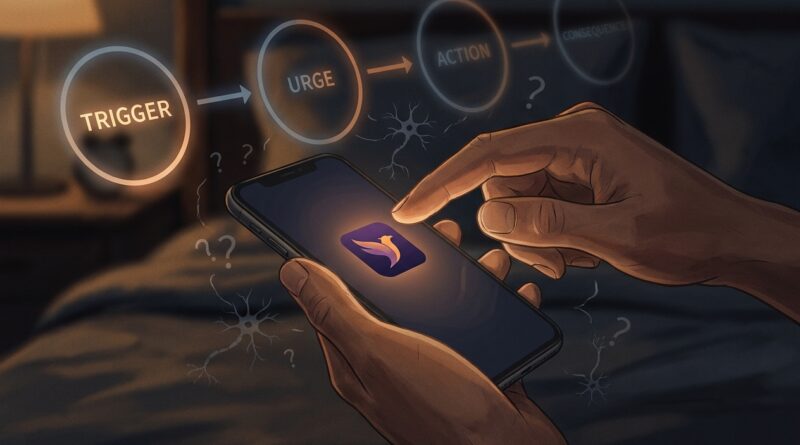
You fix the problem, feel good for three days, then somehow end up right back in the same loop. That is maddening. Maybe you tell yourself the root cause is stress, boredom, low discipline, bad sleep, or too much work. All of that may be true. But if procrastination still starts the second you open your laptop, or late-night snacking kicks in the moment the TV goes on, then the real issue is often much smaller and more specific. It is the spark, not just the fire. That is where a simple “Trigger Why” helps. Instead of asking only why the problem exists in general, you ask what exact cue starts this behavior right now. The buzz of a phone. A difficult email. Walking into the kitchen. Someone asking for “just a quick favor.” Once you spot that cue clearly, you can stop the loop earlier, when it is still easy to steer.
⚡ In a Hurry? Key Takeaways
- Your habit loop root cause trigger why is the exact cue that starts the behavior, not just the broad reason you keep doing it.
- Ask, “What happened in the 5 seconds before I did that?” Then change, block, or replace that cue.
- You do not need a big system to start. One trigger spotted today can save you from repeating the same problem tonight.
Why the usual “root cause” answer often falls short
Classic root cause thinking is useful. It helps you step back and ask better questions. But habits are sneaky. They do not always wait for a big emotional speech in your head.
Most habits run on tiny signals. Fast ones. Quiet ones. Often physical ones.
You do not always procrastinate because you are lazy. You might procrastinate because one hard task creates a moment of friction, and your brain has learned that opening a new tab gives instant relief.
You do not always doom-scroll because you love your phone. You might do it because sitting down on the couch has become the cue that says, “check out for a while.”
That is why broad answers like “I’m stressed” or “I need more discipline” can feel true and still fail to help. They explain the climate. They do not name the match that lights the fuse.
What is a Trigger Why?
A Trigger Why is the precise event, feeling, place, time, or cue that starts a habit loop.
Think of it as the doorway into the behavior.
It usually sounds like this
Not: “I snack because I have poor willpower.”
But: “I start snacking when I finish cleaning up dinner and stay standing in the kitchen.”
Not: “I procrastinate because I am overwhelmed.”
But: “I start procrastinating when I open the spreadsheet and do not know the first step.”
Not: “I keep saying yes because I am a people pleaser.”
But: “I say yes when someone asks me in real time and I feel I have to answer immediately.”
See the difference? One is a personality label. The other is usable.
The habit loop root cause trigger why, in plain English
If you want a simple phrase to remember, use this:
The root cause may explain the pattern, but the trigger explains the moment.
And the moment is where change becomes possible.
This is also why it helps to pair Trigger Why thinking with routine analysis. If you want to go one step further, this piece on Why Your 5 Whys Keep Ignoring Your Habits: The Simple ‘Routine Why’ That Explains Why You Slide Back On Autopilot fits neatly here. The trigger starts the loop. The routine keeps it running.
How to find your Trigger Why in real life
You do not need a spreadsheet. You need one honest minute.
Ask this question
What happened in the 5 seconds before I did the thing?
That is it. Keep it tight. Keep it concrete.
Look for one of these trigger types:
- Place: “When I walk into the kitchen.”
- Time: “Around 10:30 p.m.”
- Emotion: “Right after I feel stupid or stuck.”
- Social cue: “When that coworker messages me.”
- Sensory cue: “When I hear my phone buzz.”
- Transition moment: “After I finish one task and before I start the next.”
The best trigger descriptions are boringly specific. That is a good sign.
Examples that make this click fast
Procrastination
Old root cause answer: “I avoid work because I am overwhelmed.”
Trigger Why: “I switch to email when I hit a task that does not have a clear first step.”
Fix: Before starting, write the first tiny action in plain words. “Open file. Rename draft. Write ugly first sentence.”
Doom-scrolling
Old root cause answer: “I am addicted to my phone.”
Trigger Why: “I grab my phone the second there is a lull, like waiting for water to boil or standing in line.”
Fix: Give your hands a replacement. Keep a note card, Kindle, or even nothing. The point is to break the automatic reach.
Late-night snacking
Old root cause answer: “I have no self-control at night.”
Trigger Why: “I snack when I sit down to watch TV and the kitchen is still open in my head.”
Fix: Create a closing cue. Tea. Brush teeth. Turn off kitchen lights. Put snacks out of sight.
People-pleasing
Old root cause answer: “I am bad at boundaries.”
Trigger Why: “I say yes when I am asked face-to-face and feel pressure to answer on the spot.”
Fix: Use a delay script. “Let me check and get back to you.” That one sentence buys you your brain back.
What to do once you find the trigger
You have three main options. Keep it simple.
1. Remove the trigger
If a cue is obvious and avoidable, make it harder to happen.
Put the phone in another room. Log out of the distracting site. Do not keep chips on the counter. Change where you work if that one spot means “waste time.”
2. Block the path after the trigger
Sometimes the cue is unavoidable. Fine. Add friction after it.
If you always open social media when a task feels hard, use a site blocker during work hours. If you snack when TV starts, keep the snacks somewhere inconvenient. A little friction can be enough.
3. Replace the response
This is often the most realistic option.
When the cue happens, do a smaller, safer action that meets the same need. Stuck on a task? Write one messy bullet instead of fleeing to email. Need a break? Stand up and stretch for 30 seconds instead of scrolling for 30 minutes.
Why this works better than blaming yourself
Because shame is vague. Triggers are specific.
When people say, “I just need more discipline,” they often mean, “I do not yet know where the pattern starts.” Once you know where it starts, you can change the environment, the timing, the wording, or the next action.
That is a much fairer fight.
Common mistakes when using Trigger Why
Being too general
“I do this when I’m stressed” is a start, not an answer.
Ask, “What does stressed look like at the exact moment?” Is it after a Slack ping? After opening your bank app? After a hard conversation?
Trying to fix the whole habit at once
You do not need to solve your personality by Friday. Just catch one reliable cue.
Ignoring transition moments
Many bad habits start in the tiny gap between activities. After dinner. After a meeting. After getting into bed. Those in-between moments matter a lot.
Relying only on memory
If the loop is fast, memory lies. Jot a quick note right after it happens. “2:15 p.m., opened budget file, felt stuck, checked news.” That is enough.
A 2-minute Trigger Why exercise you can use today
Pick one habit that keeps coming back.
- Name the behavior. “I keep opening random tabs.”
- Ask what happened in the 5 seconds before it.
- Write the cue in one sentence. “I do this when I hit a confusing step.”
- Pick one response. Remove, block, or replace.
- Test it today, not next Monday.
That last part matters. This works best when it is fresh and practical, not theoretical.
At a Glance: Comparison
| Feature/Aspect | Details | Verdict |
|---|---|---|
| Broad root cause | Explains the bigger pattern, like stress, boredom, or overload. | Helpful for insight, but often too vague for daily habit change. |
| Trigger Why | Names the exact cue that starts the behavior, like a notification, a room, a time, or a stuck moment. | Best place to interrupt the loop fast. |
| Fix strategy | Remove the cue, add friction, or swap in a better response. | Simple, practical, and usable the same day. |
Conclusion
You do not need a giant behavior-change system to make progress. You need one clean observation. In all the noise around productivity tools, self-optimization, and apps that promise to fix the root cause, the missing piece is often the habit loop root cause trigger why. The precise cue. The little spark. When you name that, change stops being abstract. It becomes something you can use this afternoon, before you open another tab, before you reach for your phone, before you say yes when you mean no. That is real value. Not perfect control, but more control, faster. And honestly, that is usually what gets people unstuck.