Why Your 5 Whys Keep Ignoring Your Habits: The Simple ‘Routine Why’ That Explains Why You Slide Back On Autopilot
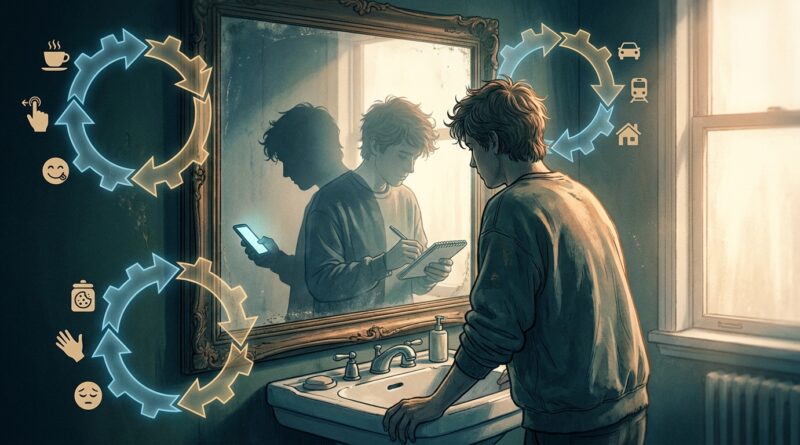
You know the feeling. You spot a problem, think it through, maybe even do a full “why did this happen?” post-mortem on yourself, and still end up right back in the same old groove by Thursday. That is maddening. It can make you feel weak, lazy, or like you “know better but just won’t do it.” Most of the time, that is not the real issue. The problem is that insight and routine are not the same thing. You may have found a reason on paper, but your body is still following a practiced path. Your shoes are by the door. Your phone is in your hand. Your lunch break means the same snack, same app, same scroll. If you want a real root cause analysis of habits, you have to ask one extra question. Not just “Why did I do that?” but “What routine was already running when I did it?” That simple shift is the Routine Why, and it explains why autopilot keeps winning.
⚡ In a Hurry? Key Takeaways
- The missing piece in habit root cause analysis is often the routine already in motion, not your lack of willpower.
- Use a simple Routine Why framework: problem, trigger, routine, reward, tiny change.
- This works best for everyday habits and loops. If a pattern is tied to trauma, addiction, or serious mental health struggles, extra support may be important.
Why normal “why” questions often fail with habits
The classic 5 Whys method is useful. Teams use it in tech, healthcare, and operations because it helps uncover causes instead of just treating symptoms.
But habits are sneaky. They are not always driven by one clean reason. They are often driven by timing, environment, body memory, convenience, and repetition.
That means you can ask:
“Why did I skip my walk?”
“Because I was tired.”
“Why was I tired?”
“Because I stayed up too late.”
“Why did I stay up too late?”
“Because I was watching videos.”
All true. Still not enough.
You have explained the story, but not the loop. The next night, the same couch, same time, same phone, same low energy state shows up, and there you go again.
That is where people get frustrated. They think, “I already figured this out. Why am I still doing it?”
Because understanding a habit is not the same as interrupting a habit.
What the “Routine Why” actually is
The Routine Why is the practical question hiding underneath the usual why chain:
What repeated sequence makes this behavior easy to do without thinking?
That is the heart of a useful root cause analysis of habits routine why framework.
Instead of stopping at motive, you trace the path.
Not just:
“Why did I overeat?”
But:
“What happened in the 10 minutes before I overate, and what do I usually do in that same sequence?”
This matters because many habit problems are not character problems. They are path problems.
Your brain likes saved routes. If a route has been repeated enough times, it starts to run with very little input from you. That is autopilot.
A simple example you will probably recognize
Let’s say your problem is this:
Every afternoon, you swear you will do focused work from 2:00 to 3:00. Instead, you somehow end up checking email, then messages, then news, then random tabs, and the hour is gone.
Your normal why chain might be:
Why did I get distracted?
Because I lacked focus.
Why did I lack focus?
Because I felt mentally tired.
Why was I tired?
Because lunch made me sluggish.
Again, that is not wrong. It is just incomplete.
Now try the Routine Why:
At 1:55, what routine starts?
- You finish lunch at your desk.
- You open your laptop while still in “catch up” mode.
- Email is already open from earlier.
- You click one “quick” reply.
- That opens three more incoming items.
- Your brain shifts into reactive mode.
- Focused work never actually begins.
See the difference?
The root issue is not just “low focus.” The root issue is that your afternoon starts with a routine that feeds scattered attention.
The Routine Why framework
Here is the dead-simple version. Use it anytime you keep sliding back into an old pattern.
1. Name the repeat problem
Be specific.
Not “I am bad with habits.”
Try “I keep scrolling for 40 minutes after dinner when I planned to tidy up.”
2. Ask the normal why once or twice
This still helps. You want some context.
Maybe you scroll because you are tired, bored, lonely, stressed, or avoiding something annoying.
Good. Keep that in mind.
3. Ask the Routine Why
Now ask:
What routine was already underway right before this happened?
Look for:
- Time of day
- Location
- Who is around
- What device is in your hand
- What you did in the five minutes before
- What usually comes next
4. Map the loop in plain English
Write it like this:
When X happens, I usually do Y, which makes Z easy.
For example:
When I finish dinner and sit on the couch, I pick up my phone “for a minute,” which makes an hour of scrolling easy.
5. Change one part of the routine, not your whole personality
This is the part people skip. They try to become a totally new person by tomorrow morning.
Do less.
Change one link in the chain:
- Move the phone charger out of the living room
- Put your walking shoes by the table, not the door
- Open your task document before lunch, not after
- Prep tea right after dinner so your hands have a different next step
6. Test, don’t judge
You are not trying to prove you are disciplined. You are running a small experiment.
That mindset matters a lot.
If the change did not help, that does not mean you failed. It means you found the wrong part of the loop.
Why people blame themselves too early
A lot of habit advice quietly turns every problem into a moral issue.
You are told to be more committed. More serious. More motivated.
Sometimes motivation matters. Often, though, the real issue is much more ordinary.
The old behavior fits smoothly into your day. The new behavior does not.
That is why bad habits can feel “natural” and good habits can feel weird, even when you truly want the good one.
The brain prefers familiar routes because they cost less effort. So if you want change to stick, make the better route easier to enter.
This is also why some people get stuck asking endless questions and never changing the loop. If that sounds familiar, you may like Why Your 5 Whys Keep Feeding Analysis Paralysis: The Simple ‘Good-Enough Why’ That Gets You Unstuck And Moving Again. It makes the same helpful point from another angle. You do not need perfect insight to make a useful change.
Common places the Routine Why shows up
Phone habits
The problem is rarely just “I am addicted to my phone” in some vague sense.
More often it is:
- I unlock my phone while waiting for one thing
- One app leads to another
- The waiting moment has become a scrolling routine
Late-night snacking
Again, not always hunger.
It may be:
- Kitchen cleanup ends
- You want a reward signal that the day is over
- The pantry is your usual closing ritual
Skipping exercise
Not always laziness.
It may be:
- You come home and sit down “for a minute”
- Sitting down turns into full shutdown mode
- The evening routine has already switched tracks
Putting off hard work
Not always fear of the task itself.
It may be:
- You start the day by checking incoming requests
- Your brain gets trained to react, not create
- The hard task never gets a clean runway
What to do today, not next month
If you want to try this right away, use this five-minute habit audit:
- Pick one repeat behavior that annoys you.
- Write when it usually happens.
- Write what happens in the five minutes before it.
- Circle the step that seems to “launch” the routine.
- Change that step for the next three days.
That is it.
For example:
Problem: I doomscroll in bed.
Before: Brush teeth, get in bed, plug in phone, check one notification, lose 45 minutes.
Launch step: Phone comes into bed with me.
Change: Charge phone across the room for three nights.
Small. Boring, even. Also effective.
What if the Routine Why still doesn’t fix it?
Then one of three things is usually happening.
The routine starts earlier than you thought
The trigger may not be bedtime. It may be dinner. Or the stressful meeting before dinner. Keep tracing back.
The reward is stronger than you admitted
If the habit gives comfort, relief, escape, or stimulation, your replacement has to do some of that job too.
The change is too big for the point of friction
If the routine is powerful, the fix needs to be smaller and closer to the trigger.
Do not wait until the middle of the behavior to fight it. Change the on-ramp.
At a Glance: Comparison
| Feature/Aspect | Details | Verdict |
|---|---|---|
| Standard 5 Whys | Good for finding reasons, context, and broad causes behind a recurring problem. | Useful, but often incomplete for autopilot habits. |
| Routine Why framework | Focuses on the sequence already running before the unwanted behavior starts. | Best for everyday habit loops you keep repeating without thinking. |
| Fixing the loop | Changes one trigger, step, or environment cue instead of trying to “be better” through willpower alone. | Usually more realistic, kinder, and easier to test. |
Conclusion
The big idea is simple. If your 5 Whys keeps ending in “I need more discipline,” you probably have not gone far enough into the routine itself. The real root cause analysis of habits often lives in the quiet sequence that makes the behavior easy, familiar, and automatic. That is why the Routine Why helps. It gives regular people a practical way to use the same thinking that shows up in tech, healthcare, and operations, but on the habits that quietly run everyday life. Instead of blaming your character, you start spotting the loop. Instead of waiting to become a new person, you tweak one step. And that is often enough to stop autopilot from driving the whole day.