Why Your 5 Whys Keep Ignoring Hidden Payoffs: The Simple ‘Reward Why’ That Explains Why You Secretly Keep The Problem Alive
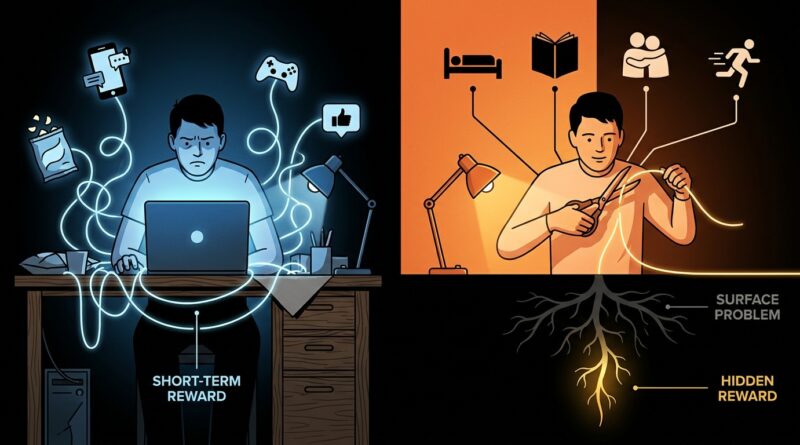
You do the work. You name the problem. You ask why five times. You set app limits, buy a planner, maybe even delete the app for a week. Then somehow you end up right back in the same loop. That is frustrating, and it can feel weirdly personal, like your own brain is working against you. Usually it is not that simple. A stubborn pattern often stays alive because some part of you is getting paid, emotionally speaking, every time it happens. Not a big obvious reward. A quiet one. Relief. Numbing out. Familiarity. Permission to avoid something harder. That is the part most root cause exercises miss. If you want a better hidden payoff root cause analysis, you need one extra question. Not just “Why does this keep happening?” but “What reward do I get when it does?” That question can explain a lot of “self-sabotage” without turning you into the villain of your own story.
⚡ In a Hurry? Key Takeaways
- The missing piece in many stubborn problems is a hidden reward, not a lack of effort or discipline.
- Ask “What do I get out of this problem continuing?” and then build a safer, healthier way to get that same reward.
- This is not about blaming yourself. It is about seeing how your nervous system, habits, and tech platforms can lock you into reward loops.
Why the usual 5 Whys can still leave you stuck
The classic 5 Whys is useful. It helps you move past the first obvious answer.
Why am I always tired? Because I stay up too late. Why do I stay up too late? Because I scroll. Why do I scroll? Because I feel wound up. Good start.
But then many people stop at explanation. They identify the trigger and the chain of events, yet the behavior keeps coming back. That is where hidden payoff root cause analysis matters.
The missing question is simple. What reward is this problem giving me?
That reward may be tiny. It may last two minutes. But if your nervous system experiences it as helpful, the pattern can stick around for years.
What a “reward why” actually means
A reward why is the benefit you get from the problem itself, even if the overall problem is hurting you.
That can sound harsh at first, so let’s make it human.
Examples of hidden payoffs
Burnout can bring a strange reward. It may give you permission to stop. If you only rest when you are completely wrecked, burnout becomes the thing that finally forces a break.
Doomscrolling can offer relief. Not joy, exactly. More like sedation. It can lower the volume on loneliness, uncertainty, or mental noise for a little while.
Anxiety can sometimes provide a sense of control. If you keep scanning for what might go wrong, part of your brain feels like you are doing something useful.
Procrastination can protect you from judgment. If you rush at the last minute, you never have to fully test what would happen if you tried your best and still fell short.
None of these rewards make the pattern healthy. They just explain why it survives.
Why your nervous system keeps choosing the same bad deal
Your nervous system is not great at long-term math. It often picks the reward that arrives fastest.
This is why so many modern apps are so hard to resist. They offer quick hits. Novelty. Validation. Escape. A sense that something is happening right now.
Meanwhile, the rewards of healthier choices are delayed. Better focus next week. More calm over time. Better sleep tomorrow. Those are real rewards, but they are slower and quieter.
So if you are trying to beat a sticky habit with pure discipline, you are often setting up a fight between a fast reward and a delayed reward. That is not impossible, but it is exhausting.
And if your environment is engineered to feed the fast reward, it gets even harder.
How to do a hidden payoff root cause analysis
You do not need a whiteboard or a consulting framework. A notes app is enough.
Step 1: Define the repeating problem clearly
Be specific.
Not “I am bad with my phone.” Try “Every night at 10:30, I pick up my phone for a quick break and lose 90 minutes to short videos.”
Step 2: Map the trigger and sequence
Write what happens right before the pattern starts.
For example: finish work, feel depleted, sit on couch, want relief, open one app, get pulled into the feed.
Step 3: Ask the reward question
Now ask:
- What do I get when this problem happens?
- What feeling does it give me right away?
- What does it help me avoid?
- What would be harder if I stopped?
This is where the truth usually shows up.
You may find that scrolling gives you decompression. Overworking gives you identity. Anxiety gives you the feeling that you are staying alert. People pleasing keeps conflict away.
Step 4: Separate the reward from the harmful method
This part is important.
The reward is real. The method is the problem.
If scrolling gives you relief, the goal is not to shame yourself for wanting relief. The goal is to create a better route to relief.
Step 5: Replace the reward, not just the behavior
This is where most advice falls apart. It tells you what to stop, but not what to get instead.
If the hidden payoff was escape, build a safer form of escape. If it was stimulation, create a cleaner source of stimulation. If it was permission to rest, make rest allowed before collapse.
Real-life examples that make this click
Burnout
Problem: You keep overcommitting and end up exhausted.
Hidden payoff: Being overwhelmed protects you from disappointing people in a direct way. It also proves you are useful.
Better reward path: Set small boundaries earlier, and create a visible way to measure your value that is not based on overextension.
Scrolling addiction
Problem: You keep reaching for your phone when you want to stop.
Hidden payoff: Instant relief from boredom, uncertainty, or emotional friction.
Better reward path: Build a short menu of low-effort rewards that actually soothe you, like a 10-minute walk, one funny podcast clip, a game with a stopping point, or texting one real friend instead of entering the endless feed.
Anxiety loops
Problem: You keep rehearsing worst-case scenarios.
Hidden payoff: It feels like preparation. It gives a sense of control.
Better reward path: Replace free-floating worry with a short planning ritual. Ten minutes of concrete planning can give your brain the “I did something” feeling without hours of stress cycling.
Why this is not the same as blaming yourself
A lot of people hear “hidden payoff” and think, so this is all my fault?
No.
This is about function, not blame. A pattern can help you survive one thing while hurting you in another area. That does not make you weak. It makes you human.
It also does not mean the problem exists only inside you. Sometimes your habit survives because a platform, workplace, family system, or social setup keeps rewarding it.
That is why this topic pairs well with power, not just psychology. If you want the fuller picture, read Why Your 5 Whys Keep Ignoring Power Dynamics: The Simple ‘Power Why’ That Reveals Who Benefits From Your Problem Staying Stuck. Sometimes the loop is rewarding you a little while rewarding someone else a lot.
What tech gets right, and wrong, about reward loops
Tech companies understand hidden payoffs extremely well.
They know you do not come back just because an app is useful. You come back because it gives you something fast. A micro-reward. A release. A social cue. A tiny hit of novelty.
The problem is that most self-help advice acts like your behavior exists in a vacuum. It tells you to “be more disciplined” while you are using tools designed by teams whose entire job is to keep the reward loop alive.
That does not mean you are powerless. It means you need a smarter fix.
Do not only remove friction from the “good” habit. Add reward to it. And do not only add blockers to the “bad” habit. Take away the easy payoff that keeps pulling you back.
Simple questions to ask this week
If you want to try this without overthinking it, pick one repeating problem and answer these:
- When does this usually happen?
- What do I feel right before it starts?
- What do I get from it in the first 30 seconds?
- What discomfort does it help me avoid?
- How could I get that same reward in a less costly way?
Keep your answers plain. You are not writing a thesis. You are trying to catch the loop in honest language.
What to do once you find the payoff
Start small.
If the reward is relief, create a two-minute relief option.
If the reward is connection, make connection easier than the app.
If the reward is permission to stop, schedule stopping points before your body has to force them.
If the reward is feeling competent, build a tiny daily task that gives a clear win.
The key idea is this. You rarely beat an entrenched pattern by removing the reward and offering nothing in return.
At a Glance: Comparison
| Feature/Aspect | Details | Verdict |
|---|---|---|
| Standard 5 Whys | Good for finding triggers, chains, and surface causes, but it can miss the benefit that keeps the problem alive. | Useful starting point, not the full picture. |
| Reward Why | Looks for the immediate emotional payoff, such as relief, control, numbness, or permission. | Best for stubborn patterns that keep returning. |
| Fix strategy | Replace the reward path, not just the behavior. Reduce access to the harmful loop and build a better source for the same need. | Most practical and most likely to stick. |
Conclusion
If you have been trying to fix burnout, scrolling addiction, or anxiety with stricter rules and better systems, it makes sense that you are tired. A lot of modern tools are built around reward loops, and most advice still pretends the issue is just weak willpower. It usually is not. Once you start looking for the hidden psychological payoff behind a stubborn pattern, the whole problem changes shape. You stop asking, “Why am I like this?” and start asking, “What is this doing for me, and how can I meet that need in a better way?” That is the real value of hidden payoff root cause analysis. It helps you change the reward structure at the root instead of fighting the same battle every day. And frankly, more tech and productivity sites should be honest about that.